
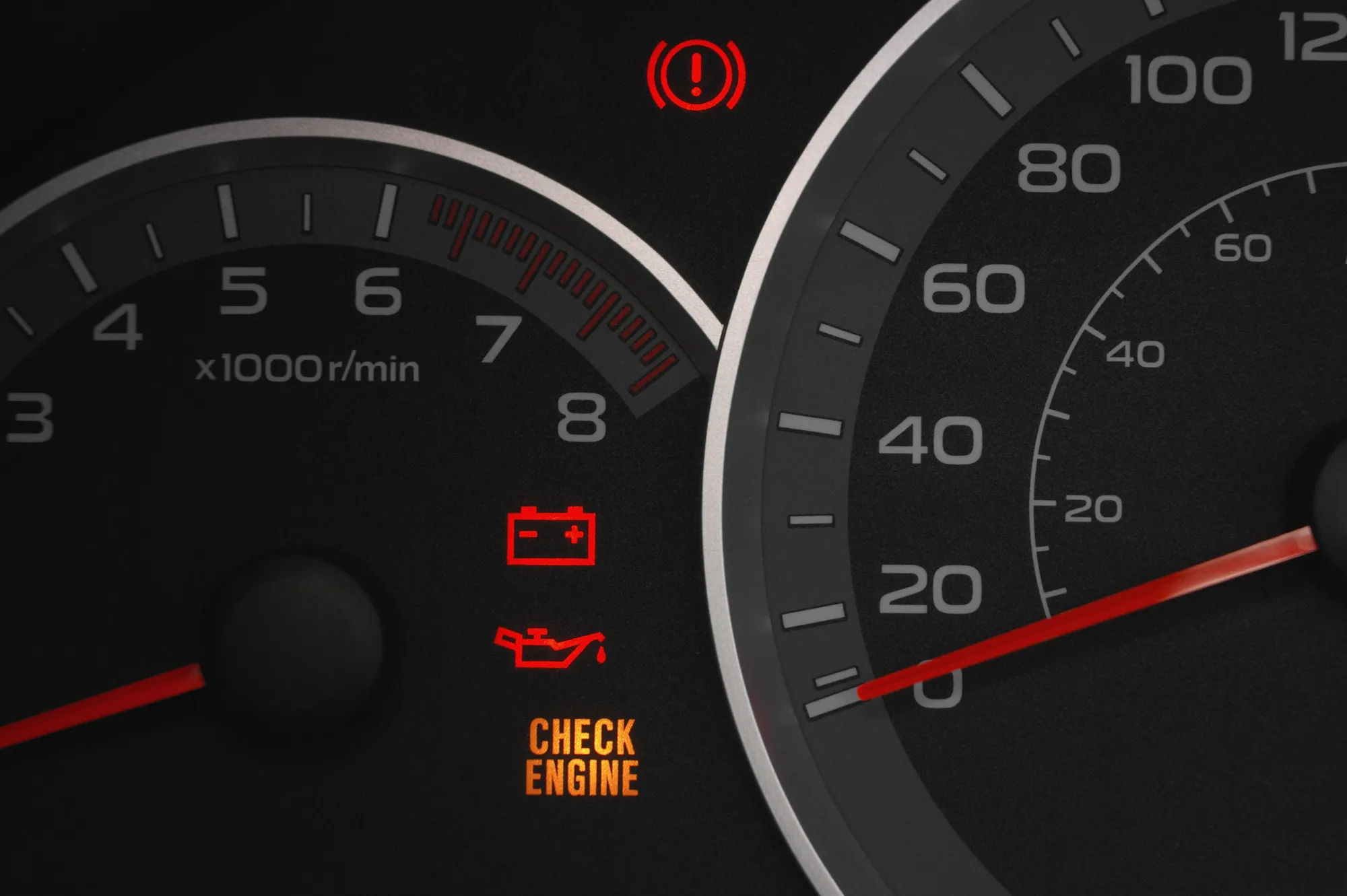
If your brake lights stay on after you park in Baton Rouge, the stop-lamp circuit still reads the brake pedal as being pressed. Common causes include a misadjusted or failing brake-pedal switch, a damaged pedal stopper, an electrical backfeed, or a problem with a bulb socket, connector, or wiring harness.
Brake lights that stay illuminated continue drawing power after the vehicle is switched off and may drain the battery. A quick visual check can confirm what the lights are doing. Finding the cause, however, may require electrical testing, one of the car maintenance and repairs best left to the experts.
How the Brake-Pedal Switch and Stopper Work
Most brake-light systems have a switch mounted near the top of the brake-pedal arm. Designs vary, but the switch usually has a spring-loaded plunger that contacts the pedal arm or a small stopper pad.
When the pedal is fully released, the pedal arm presses against the switch plunger. Pressing the brake pedal changes the plunger’s position and turns on the brake lights. When you release the pedal, the plunger should return to its resting position and the lights should turn off.
The switch responds to a small amount of pedal movement, so its position matters. If it is loose, mounted incorrectly, or out of adjustment, it may continue reading the pedal as applied after you remove your foot.
Adjustment procedures vary by vehicle. Hyundai and Mitsubishi service instructions, for example, specify different switch-to-stopper clearances for certain models. A measurement intended for one vehicle should not be applied to another. The technician needs to follow the correct procedure for the specific year, make, and model.
Four Reasons Your Car Brake Lights Won’t Turn Off
Several faults can cause this symptom. Which lights stay on, and how they respond to pedal movement, can help narrow down the source.
1. The brake-light switch is misadjusted or failing
A brake-light switch can shift out of position, be installed incorrectly, or fail internally. If the plunger does not reach its released position, the circuit may keep the lights on.
On some vehicles, even a small amount of pedal movement can affect the switch. A General Motors technical bulletin addressed unwanted brake-light illumination in parked vehicles because the pedal was not staying fully released.
A switch issue will often affect all the brake lights because they receive the same brake-applied signal. That pattern does not confirm a failed switch by itself. The pedal, stopper, wiring, and related inputs should also be checked before recommending brake light switch repair or replacement.
2. The brake-pedal stopper is damaged or missing
The pedal stopper is usually a small pad between the pedal arm and the switch plunger. Although it is a simple part, it helps hold the switch in the correct position when the pedal is released.
If the pad deteriorates or falls out, the plunger may remain extended even though the pedal looks normal. Hyundai documented this type of failure in a recall procedure involving brake lights that stayed illuminated.
Small broken pieces in the driver’s footwell can point to a damaged stopper. Since stopper materials and pedal designs differ, the pedal assembly still needs to be inspected before choosing the correct repair.
3. Wiring or trailer connections are backfeeding the circuit
An electrical backfeed occurs when the brake-light circuit receives voltage from an unintended source.
Navistar troubleshooting information identifies corrosion in a trailer cord or plug as one possible path for voltage to feed back into the brake-light circuit. Damaged wiring, poor splices, or faulty connectors elsewhere in the circuit can cause similar behavior.
Tell the technician if your vehicle has factory or aftermarket trailer wiring, even if no trailer is currently connected. The plug, harness, splices, and connectors may need to be inspected. Replacing the pedal switch without testing the circuit could leave the real fault unresolved.
4. A connector, socket, or lamp-area fault is affecting the circuit
Contamination and corrosion can interfere with electrical contacts. Mitsubishi documented grease contamination entering the stop-lamp switch on certain vehicles. The repair procedure called for cleaning the connector contacts, replacing the affected switch, setting the proper gap, and checking the lights afterward.
Problems can also develop near a rear lamp assembly. If only one lamp behaves abnormally, or its behavior changes when the parking lights are switched on, the technician may inspect that lamp’s bulb, socket, connector, ground, and wiring.
If every brake light stays steadily illuminated after shutdown, a shared switch command or power feed is more likely than several rear sockets failing at the same time.
A Quick Check When Brake Lights Stay On
You can confirm the symptom without taking apart the pedal assembly or touching the wiring:
- Park securely on a level surface.
- Switch off the vehicle.
- Remove your foot and make sure the brake pedal is fully released.
- Use a helper, a reflective surface, or a phone recording placed safely behind the vehicle to view the brake lights.
- Note if all the brake lights remain steadily illuminated or if only one lamp acts abnormally.
- Gently lift the released pedal toward the driver and watch to see if the lights turn off.
If lifting the pedal turns off the lights, the switch may be close to its actuation point. The pedal or stopper may also be failing to hold the expected position. This is a useful diagnostic clue, but it does not identify the faulty part by itself.
Do not wedge an object against the pedal or make an unverified switch adjustment. An incorrect adjustment could leave the lights on or prevent them from illuminating when the pedal is pressed.
Why the Brake Lights Can Drain the Battery
Brake lights use battery power whenever they are illuminated. If they stay on while the vehicle is parked, they continue drawing current with the engine off.
The effect depends on the battery’s condition and how long the lights remain on. You may notice slower starting, a weak battery, or a battery that has discharged while the vehicle was parked.
The lighting fault and battery complaint should be checked together. Repairing the brake-light problem stops the unwanted electrical draw. If the battery has already been deeply or repeatedly discharged, it may also need testing.
Why Brake Light Switch Repair Starts With Testing
Installing a new switch will not fix every brake-light problem. Depending on the symptoms, a technician may need to:
- Check the pedal stopper for missing material, cracks, or deterioration
- Make sure the pedal returns fully to its resting position
- Inspect the switch mounting and verify the model-specific adjustment
- Test whether the switch changes electrical state correctly
- Look for damaged, contaminated, or corroded wiring and connectors
- Inspect the rear lamp sockets, grounds, and harness connections
- Check trailer wiring or plugs for a possible backfeed
- Measure voltage in the brake-light circuit
- Review pedal or brake-switch data if the vehicle reports it electronically
- Confirm that the lights turn on with pedal application and switch off after release
The final function check is essential. Manufacturer procedures call for confirming both parts of the operation: the lights should illuminate when the pedal is pressed and turn off when it is released.
What to Tell the Shop
Before your appointment, ask the shop for a current repair quote and make a note of:
- Which brake lights stay on
- If the center brake light is also illuminated
- What happens when you gently lift the released pedal
- Any broken pieces found near the pedal
- Factory or aftermarket trailer wiring
- Changes in the symptom when the parking lights are turned on
- Recent weak-battery or starting problems
- When you first noticed the issue
You do not need to identify the failed part yourself. These details can help the technician distinguish a pedal or switch problem from a socket, connector, harness, or backfeed fault.