
The hard part is over. You picked the set, we mounted it, and you pulled off Drusilla Lane on tread that has never touched pavement. Most drivers treat that as the finish line.
It isn’t, quite. A new set goes through a short break-in stretch where the wheels are still settling, the tread is not yet at full grip, and the car tells you small fibs about how it’s handling. None of that is a problem. It is all predictable, and it runs on a timeline you can put on a calendar.
Here is what the first 500 miles actually ask of you, in the order they ask it. It applies to any new tires Baton Rouge drivers buy, whatever the brand on the sidewall.
The First 100 Miles: Why We Want the Wheels Back
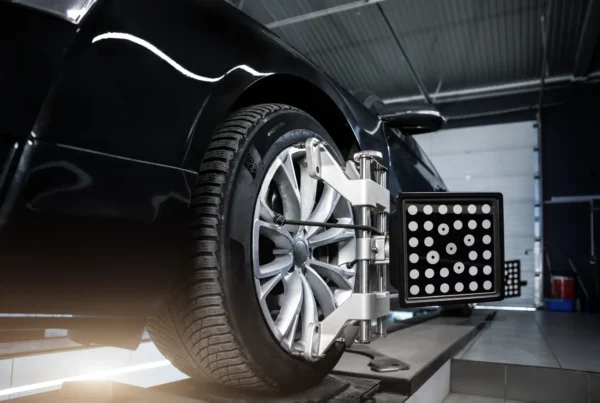
Any time a wheel comes off a vehicle and goes back on, the assembly needs a moment to settle. The wheel seats down against the hub, the fasteners find their final position, and the clamping force that was perfect in the bay can ease off slightly once the car has been down the road.
That is why the industry standard is to re-check lug nut torque after the first 50 to 100 miles of driving. It is not a sign that anything was done wrong. It is the second half of a job that has two halves.
The Tire Industry Association teaches wheel installation as RIST: Remove debris from the mating surfaces, Inspect components for damage or excessive wear, Snug the fasteners in a star pattern, and Torque to specification. When any step before the final torque gets skipped or rushed, the association notes that the chances of a loose wheel or a wheel-off incident go up. A torque check after that first stretch of driving is how a shop confirms the whole sequence held.
Fifty to 100 miles arrives faster than people expect. Pick the car up on a Friday, run errands on Airline Highway, commute in from Prairieville or Denham Springs on Monday, and you are past 100 miles before the week really starts. That is the window.
The visit itself is short, and you do not need to leave the car for it. Think of it as part of finishing the job. The fastest way to get it on the books is to schedule an appointment before it slips your mind.
The First Rainstorm: New Tread Is Slicker Than You Expect
This is the part nobody warns drivers about, and in south Louisiana it matters more than almost anywhere else.
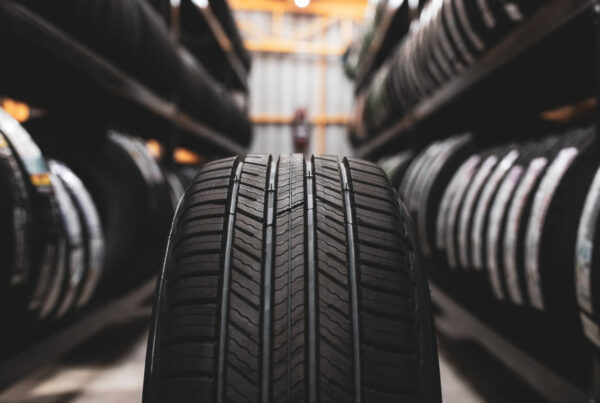
Tires are cured in molds, and a thin release lubricant is applied so the finished tire separates cleanly from the mold. A film of that lubricant stays on the tread surface when the tire ships. Nokian Tyres describes it plainly: that film reduces traction until it wears off, which takes roughly 300 miles of driving.
There is a second effect stacked on top of it. Brand-new tread blocks are tall and stiff and have never flexed. They move slightly under cornering and braking before they bite, a sensation the industry calls tread squirm, and it fades over the first few hundred miles as the blocks take a set.
Put those together and you get tires that are genuinely a little less grippy in week one than they will be in month two. On dry pavement you will never notice. In an afternoon downpour on Perkins Road, the same brake pedal pressure that felt fine yesterday may leave you a car length longer to stop.
Wet roads are not a small category of risk. According to the Federal Highway Administration, 75 percent of weather-related vehicle crashes happen on wet pavement and 47 percent happen while it is actually raining, accounting for nearly 5,700 deaths and more than 544,700 injuries a year. Baton Rouge collects roughly 62 inches of rain in a normal year. Your first rainy commute on a new set is not a hypothetical.
So for the first few hundred miles:
- Leave more following distance than usual, especially on wet pavement.
- Brake earlier and more gradually instead of late and hard.
- Take on-ramps and turns with less enthusiasm than the tires will eventually deserve.
- Skip the hard launches from a stop, even in the dry.
Nokian puts the full break-in at about 300 to 500 miles, or a little more than a tank of gas. Drive that tank politely and the tires come out the other side doing exactly what you paid for.
Miles 100 to 500: The Settling-In Period
Somewhere in this stretch the car stops feeling new and starts feeling right.
Steering response sharpens as the tread blocks stop squirming. Road noise usually drops a little and changes pitch. If you went up in tread depth or switched tread patterns, the ride may feel firmer or quieter than the worn-out set you replaced, and your ear needs a couple of weeks to accept it as normal.
Fuel economy is the one that generates the most phone calls. Deeper, stiffer tread has more rolling resistance than the shaved-down set you just retired, so the trip computer may read slightly worse for the first few hundred miles. Judge the new set after break-in rather than during it, and judge it against correct inflation pressure.
One caution: if the car pulls to one side or the steering wheel sits crooked once things settle, that is not break-in. That is a separate conversation about alignment, and it is worth reading why a vehicle veers to the left or right before you write it off as new-tire feel.
Pressure Is the One Thing You Control
Everything else on this list happens to your tires. Inflation pressure is the variable you actually hold in your hand.
The U.S. Tire Manufacturers Association recommends checking pressure at least once a month, and checking it cold, meaning the vehicle has been parked at least three hours. Pressure read after a hot run out I-12 to Walker will always look higher than the truth.
Two numbers worth keeping in your head:
- Inflation pressure moves one to two pounds for every 10 degrees of temperature change, up in warm weather and down in cold. A set installed here in September will read low in a January cold snap without ever having a leak.
- Under-inflation costs fuel. FuelEconomy.gov puts it at roughly 0.2 percent of your gas mileage for every 1 psi the average pressure across all four tires falls short, and keeping tires at the recommended pressure improves mileage by about 0.6 percent on average and up to 3 percent in some cases.
Do not outsource the job to your dashboard light, either. USTMA points out that a tire pressure monitoring system warns at 25 percent below the recommended pressure, which “may be too late to prevent damage.” TPMS is a smoke alarm, not a thermostat. A gauge in the glovebox and five minutes in the driveway once a month is the real system.
That matters most here because under-inflated tires build excessive heat and stress, which causes irregular wear and internal damage. In a climate with average highs near 92 degrees in July and August, the pavement is already doing its part to heat your tires. Correct pressure is how you stop stacking the deck.
Your First Tire Rotation in Baton Rouge: The Visit Most Drivers Never Book
Here is the appointment that gets skipped: the first tire rotation Baton Rouge drivers keep meaning to schedule and never do.
USTMA recommends rotating every 5,000 to 8,000 miles when the vehicle’s manual doesn’t specify an interval. Michelin’s guidance lands in the same place, every 5,000 to 7,000 miles or every other oil change. Whatever number your manual gives, the first one sets the pattern for the life of the set.
It matters because the four tires are not doing the same job. Front tires wear faster, absorbing steering input, most of the braking, and the cornering loads. Rears wear more slowly and more evenly. Skip rotations and you get uneven tread depth across the set, less grip, more noise, and a shorter life for tires that were perfectly good.
There is a paperwork angle too. Michelin notes that some tire warranties specify a rotation interval, and missing it can void the mileage coverage. If your set carries a mileage warranty, the rotation history is what you would lean on to claim it. That is a real reason to keep the visits on record at the tire shop Baton Rouge drivers bought the set from in the first place, instead of wherever comes up first in a search for a tire shop near me.
Truck owners around Zachary and Gonzales see it most clearly. Skip a year of rotations and the fronts come up visibly shallower than the rears by the next summer, which means replacing four tires earlier than the tread on the back two deserved.
Wondering what your particular set already includes, or what the next service runs for your vehicle? Ask us directly rather than guessing from a number you found online. Request a current quote and you will get an answer for your vehicle, not an average.
Louisiana Heat Changes the Math
A tire maintenance schedule written for a mild, dry climate does not translate cleanly to East Baton Rouge Parish.
Two local conditions do the damage. The first is heat: average highs near 92 degrees through July and August, on asphalt that holds it, with under-inflated tires generating still more heat from flex. The second is water: roughly 62 inches of rain a year, much of it arriving as short violent afternoon storms that put standing water on roads that were dry an hour earlier.
Heat punishes low pressure. Water punishes low tread. A monthly pressure check answers the first, and on-time rotation, which keeps tread depth even across the set, answers the second. Neither takes real effort, and both matter more in Ascension, Livingston and East Baton Rouge parishes than they would in a dry mountain state.
When tread eventually reaches 2/32nds of an inch, USTMA says the tire is finished regardless of how it looks. The goal of everything above is to make all four tires arrive at that point together, as late as possible.
The Calendar Habit That Gets the Most Out of a New Set
Before you pull out of the parking lot, set two reminders on your phone. That is the whole program.
Reminder one, inside the first week: come back for the torque check between 50 and 100 miles. Short visit, and it closes out the installation properly.
Reminder two, repeating monthly: check pressure cold in the driveway, all four tires plus the spare, against the number on the driver’s door jamb rather than the number on the tire sidewall.
Then add the third by habit rather than by alarm: book the rotation at your manual’s interval, or tie it to every other oil change so you never have to remember a mileage number at all.
That is the whole plan. Drive the first 300 to 500 miles with a little patience while the release film wears off and the tread blocks settle. Keep the pressure honest year-round, and rotate on schedule. Those habits are the difference between a set that reaches its mileage rating and a set that quietly gives up a season early.
If you’re due for the torque check, a pressure check, or the first rotation, we’re at 3251 Drusilla Lane, minutes from Jefferson Highway and the I-10 corridor, and we’ve been taking care of drivers across Baton Rouge and the surrounding parishes since 1994.
Schedule an appointment and let’s get your new set off to the right start.