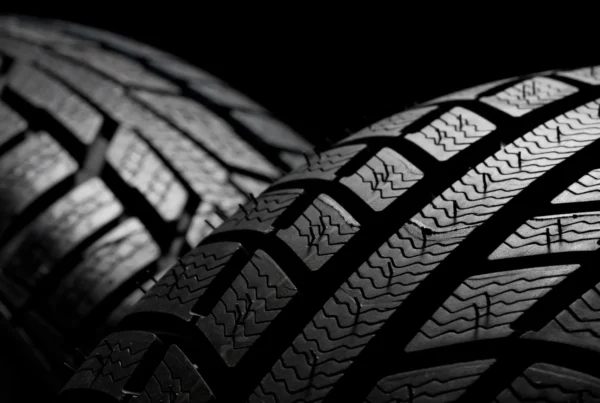

If you’re deciding whether to put new tires on the front or rear, the usual answer is the rear axle when replacing only two. For Baton Rouge drivers, that recommendation comes with two checks: the remaining pair must be serviceable, and the vehicle manufacturer must allow the combination.
The U.S. Tire Manufacturers Association recommends replacing all four together for optimal performance. When a two-tire replacement is appropriate, putting the deeper tread at the rear helps preserve wet-road stability. The goal is to keep grip balanced between the axles. USTMA’s Tire Care & Safety Guide explains the reasoning.
Why put two new tires on the rear?
Deeper tread generally moves water away more effectively. Keeping that traction advantage at the rear helps reduce the potential for oversteer, when the rear of the vehicle loses grip and begins moving outward during a turn.
Michelin explains that rear traction loss in wet conditions is harder to recover from than front traction loss. That is why a front-wheel-drive vehicle still needs dependable rear grip. Installing new tires up front solely because those wheels provide drive does not address that balance. See Michelin’s tire-matching guidance.
For example, on a vehicle with compatible, same-size tires, worn front tires may be removed, the serviceable rear pair moved forward, and the new pair installed at the rear. That plan depends on inspection and manufacturer approval.
Check the pair you plan to keep
Deciding where to put two new tires starts with evaluating all four. More tread than the discarded pair does not automatically make the remaining tires suitable.
The inspection should address:
- Remaining tread and wear pattern. Michelin calls for replacement when tread reaches the wear indicators at 2/32 inch. Uneven wear also needs attention.
- Damage. Cuts, cracking, bulges, or blisters require professional assessment, even with tread remaining.
- Age. The final four digits of the DOT code identify the manufacture week and year. Michelin recommends annual professional inspections after five years of service and replacement at ten years from manufacture. Follow the applicable vehicle and tire manufacturer guidance.
- Symptoms. Mention persistent vibration, pulling, or handling changes. Acceptable-looking tread does not rule out internal damage or another problem.
These checks follow Michelin’s replacement guidance. If the retained pair has reached replacement condition, a two-tire plan needs to change.
Plantation Tire & Auto offers tire inspections that assess tread depth, damage, and irregular wear. Uneven wear or pulling may also warrant alignment inspection; our explanation of why a vehicle pulls left or right covers that symptom.
When manufacturer requirements change the plan
AWD and 4WD: Differences in tire circumference can stress drivetrain components. Check the manufacturer’s permitted variation before mixing new and worn tires. There is no single tread-depth allowance to apply to every model. Four replacements may be required.
Different front and rear sizes: Some vehicles leave the factory with different tire sizes on each axle. Do not move rear tires forward unless the specified fitment permits it. The replacement plan must preserve the manufacturer’s axle-specific requirements.
Tire compatibility: Confirm size, load capacity, speed rating, construction, and tire type against the placard, owner’s manual, and applicable manufacturer instructions. A matching size label alone does not settle compatibility. Our guide to choosing the right tires for your vehicle explains the selection process.
How to review a recommendation for two or four tires
If you’re told the vehicle needs four tires, ask what determines that recommendation. Is the remaining pair worn or damaged, or would its combination with the new tires fall outside a manufacturer requirement? Those answers explain different problems. A condition issue calls for evaluating the tires themselves; a matching requirement calls for comparing the proposed set with the vehicle’s instructions.
Ask to see the measurements for the tires being kept and the requirement used to evaluate them. A useful explanation should connect those findings to your vehicle. The question is whether the proposed combination is acceptable, not whether two tires can physically be mounted.
For a vehicle with different front and rear sizes, ask the technician to identify which size belongs on each axle before discussing movement of the existing tires. If the fronts need replacement but cannot be exchanged with the rears, the general rear-placement recommendation alone does not supply a complete installation plan. The manufacturer’s fitment instructions need to settle that plan.
You can also ask the technician to separate tire condition from the cause of any unusual wear. Replacing a worn tire and deciding whether alignment inspection is warranted are related decisions, but the tread findings should explain why each is recommended.
What the installation plan should confirm
Plantation Tire & Auto provides tire installation and inspections in Baton Rouge. Before approving a two-tire replacement, have the plan identify:
- Which tires will remain and their measured condition.
- Whether the vehicle permits the proposed tire combination.
- Where each pair will be installed.
- The specified cold inflation pressure for each axle.
Ask for that explanation before the tires are moved. For example, if the plan keeps the existing rear pair, confirm that both passed inspection and are approved for their intended positions. If the plan changes to four replacements, ask which inspection finding or manufacturer instruction ruled out keeping a pair.
If a recommendation is unclear, ask the technician to point out the finding on the tire or the relevant instruction in the manual. You should be able to understand the reason for the proposed axle placement before agreeing to the work.
Keep a record of the tread measurements and any wear or damage noted. That gives you something concrete to refer to if you have questions about why certain tires were kept or replaced. Describe any pulling or vibration you noticed, too, so the inspection addresses your symptoms alongside the visible condition.
For an AWD or 4WD vehicle, ask where the applicable matching requirement was found. A general rule offered for another model is not a substitute for the instructions that apply to yours.
Use the vehicle placard or owner’s manual for pressure settings; front and rear specifications may differ. Rear placement is the general recommendation for an approved two-tire replacement, while tire condition and manufacturer requirements determine whether replacing just two is appropriate.